About EUR/AUD
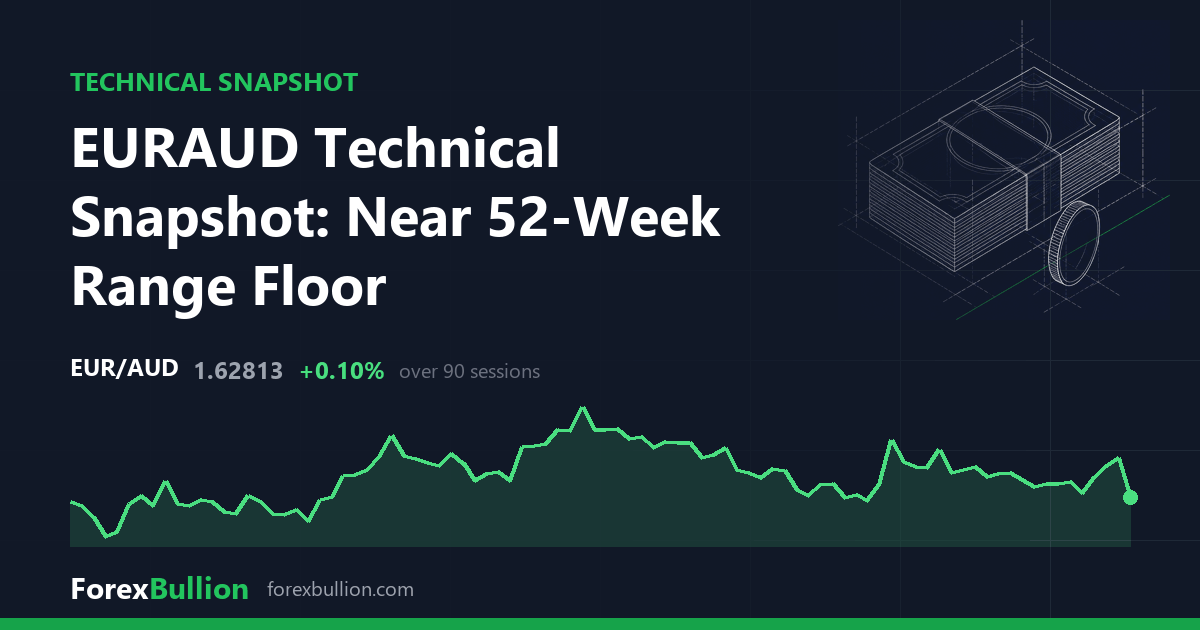
EUR/AUD pairs the Euro against the Australian Dollar, creating a cross that reflects the dynamic between Europe’s diversified service-oriented economy and Australia’s commodity-driven export model. This pair is particularly interesting because it captures two distinct economic narratives: Eurozone monetary policy and growth on one side, and Australian commodity exports, Chinese demand, and Asia-Pacific risk sentiment on the other. EUR/AUD tends to exhibit strong trending behavior and wide daily ranges, often moving 80-120 pips per day, making it popular among swing traders who appreciate its directional conviction. The pair effectively removes the US Dollar from the equation, offering a pure view of European versus Australian economic fundamentals.
What Moves EUR/AUD?
ECB vs RBA Policy Divergence
The interest rate differential between the European Central Bank and the Reserve Bank of Australia is the primary structural driver. When the RBA maintains higher rates relative to the ECB, EUR/AUD tends to drift lower as carry flows favor AUD. Conversely, ECB tightening or RBA dovishness pushes the pair higher. Rate decision days for either central bank frequently produce the largest moves.
Commodity Prices
Since AUD is a commodity currency sensitive to iron ore, coal, and gold prices, rising commodity prices tend to strengthen AUD and push EUR/AUD lower. Falling commodity prices have the opposite effect. This gives EUR/AUD a useful inverse correlation with the broader commodity complex that can complement commodity trading strategies.
China Economic Data
China is Australia’s largest trading partner, and Chinese economic health directly influences AUD strength. Strong Chinese GDP, PMI, or stimulus announcements tend to push EUR/AUD lower by boosting AUD. European trade with China also matters, but the AUD sensitivity is significantly greater.
Eurozone Economic Sentiment
ECB policy meetings, Eurozone GDP, German industrial production, and European political developments drive the EUR side. During periods of European political uncertainty, EUR/AUD tends to fall even if AUD conditions are neutral.
Trading EUR/AUD
EUR/AUD typically offers spreads of 2.0 to 4.0 pips with solid liquidity during both Asian and European sessions. The pair is active during the Sydney/Tokyo overlap and again during the London session, creating two distinct windows of volatility. EUR/AUD’s strong trending characteristics make it well-suited for breakout and momentum strategies. Position sizing should account for the wider daily ranges and spread costs compared to major pairs. The pair also responds well to technical analysis, with support and resistance levels frequently holding due to the mix of institutional and retail participation.